
Live Sound Engineering
Master the sound behind the performance.
Learn how professional live sound systems work, from system setup and microphone placement to digital mixing consoles, stage monitoring and live audio mixing. Develop practical knowledge of the technology and workflows used in concerts, performances and live events.
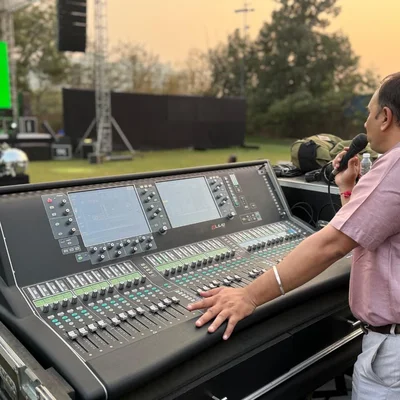
Course Overview
Every stage. Every performance. Every sound matters.
The 6-month Certificate Course in Live Sound Engineering at V Sound, Ahmedabad, is designed for aspiring live sound engineers and audio technicians who want to understand the technical processes involved in concerts, performances, venues and live events.
The course introduces students to the fundamentals of sound and electronics, amplification, professional sound systems, venue acoustics, mixing consoles, microphones, stage monitoring and live mixing techniques.
Through theoretical instruction and practical exercises, students explore how live audio systems are configured, operated and managed, including signal flow, system alignment, gain staging and feedback control.
From setting up a sound system to understanding the demands of a live performance, the programme builds a foundation in the technical and operational aspects of professional live sound.
Who Is This Course For?
Interested in managing audio for concerts, performances and live events.
Wanting to understand professional sound systems and stage audio operations.
Looking to develop technical knowledge of microphones, monitors and live mixing.
Interested in sound system setup, troubleshooting and live production workflows.
What You Will Study
Fundamentals of Sound & Electronics
- 01Basics of Sound
- 02Basic Electronics
- 03Amplification
Live Sound Systems & Setup
- 04System Setup
- 05Rigging
- 06Sound System Positioning
- 07Radio Frequency Coordination & Wireless Audio Systems
Venue Acoustics & System Alignment
- 08Venue Acoustics
- 09System Analysis & Alignment
Analog & Digital Mixing Consoles
- 10Analog Consoles
- 11Digital Consoles
- 12Gain Staging
Microphones, Monitoring & Stage Audio
- 13Microphones
- 14Monitors
- 15DI Boxes
- 16Effects Processors
Live Mixing & Performance Audio
- 17Feedback Control
- 18Monitor Mixing
- 19Live Mixing Techniques
Course Outcomes
What you should be able to do:
- Understand fundamentals of sound, amplification and audio signal flow.
- Identify components of professional live sound systems.
- Set up and position audio equipment for different performance environments.
- Understand operation of analog and digital mixing consoles.
- Select and position microphones for live applications.
- Use DI boxes, stage monitors and audio processors.
- Apply gain staging and feedback control techniques.
- Understand venue acoustics and sound system alignment.
- Develop front-of-house and monitor mixing techniques.
- Follow sound plans, stage requirements and performance cues.
- Understand coordination involved in live audio production.
Career Options
Support and manage audio requirements during live performances and events.
Mix the sound heard by audiences during live performances.
Manage stage monitor mixes to support performers.
Assist with equipment setup, configuration and technical operation.
Support audio systems and production teams at events and venues.
Work as part of teams handling sound equipment and operations for touring productions.
Assessment
Learn the system. Understand the signal. Apply your skills.
Students are assessed through practical live sound exercises and a final project that brings together the technical concepts covered during the course. The assessment focuses on understanding sound systems, equipment operation, signal flow and the application of live mixing techniques. A certificate is awarded upon successful completion of the course requirements.
Frequently Asked Questions
What is Live Sound Engineering?
Live sound engineering involves setting up, operating and managing audio systems for concerts, performances, events and other live environments. It includes microphones, mixing consoles, speakers, stage monitoring and sound system operation.
Do I need previous experience in audio engineering?
The course introduces foundational technical concepts. Prospective students should confirm current eligibility requirements and expected entry-level knowledge with V Sound.
Will I learn to use digital mixing consoles?
Yes. The syllabus covers both analog and digital mixing consoles, along with gain staging and live mixing techniques.
Does the course include practical training?
Yes. Practical learning is part of the course structure. The exact training schedule and any external event exposure should be confirmed with the institute.
How does this differ from Sound Engineering & Music Production?
Live Sound Engineering focuses on audio systems and real-time sound management for performances and events. The 12-month programme covers a broader range of studio recording, audio technology, music production, mixing and mastering subjects.
What career opportunities can I explore?
Potential pathways include live sound engineering, front-of-house mixing, monitor engineering, live audio technical support and touring production work. Entry-level opportunities depend on practical experience and employer requirements.
Make Your Place Behind the Sound.
Explore the 6 months Live Sound Engineering course at V Sound, Ahmedabad.